This process outlines the steps involved in transforming baled PET bottles into high-quality recycled PET flakes.
De-Baling and Feeding In
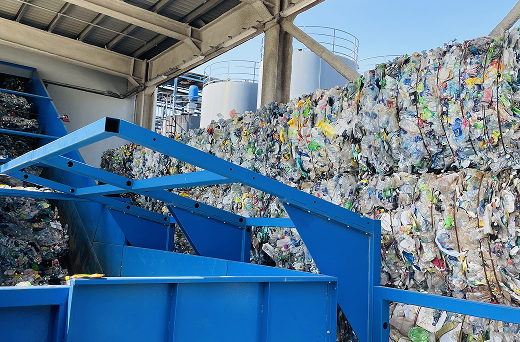
The process begins with the raw material: PET bottles, typically received in bales.
Feedstock Quality Check
All collected bottles undergo inspection prior to processing to minimise contamination.
De-baling
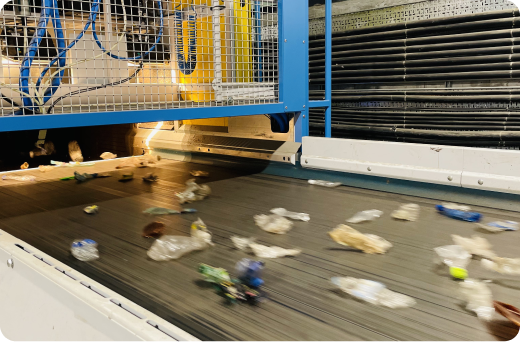
The bales are broken apart (de-baled) to ensure that each bottle can be individually detected by the machinery. The bottles are then fed onto an in-feed conveyor at a controlled, even speed for subsequent processing.
Primary Separation and Label Removal
This stage focuses on removing large contaminants and initial separation steps.
Ferrous Metal Removal
The material stream passes through an over-belt magnet to extract any trapped ferrous (iron-containing) metals.
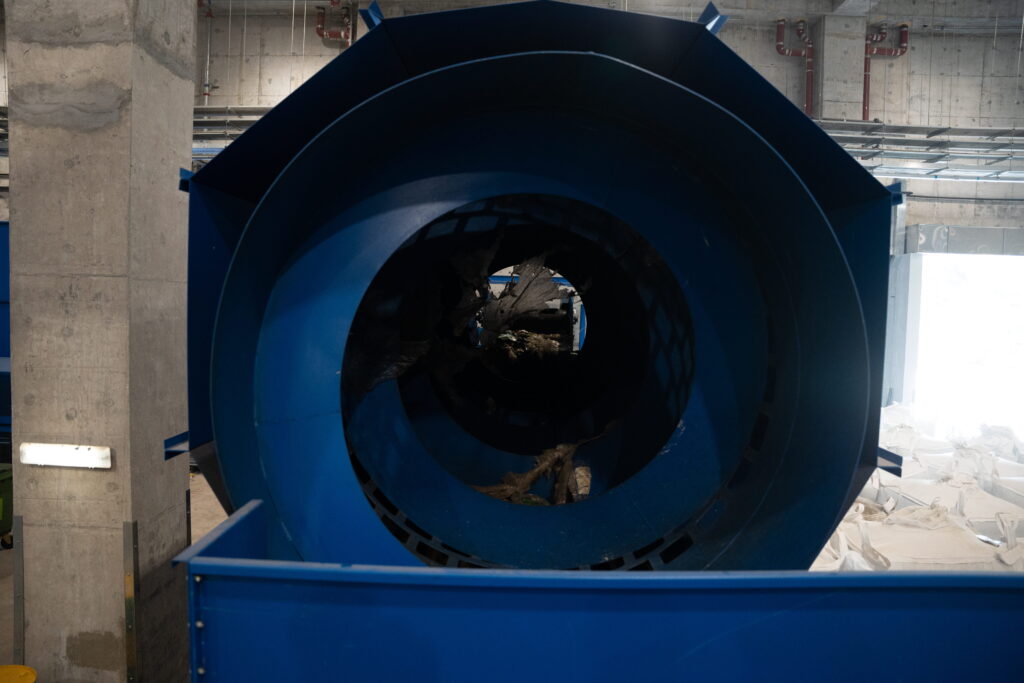
Sizing Screening
Bottles enter a bale trommel (a rotating drum screen) which collects materials of a defined bottle size, rejecting items that are either too small or too large for the main processing line.
Label Removal
The bottles proceed to label scraper which mechanically scratches the surface to remove paper and plastic labels.
Advanced Sorting and Quality Assurance
This section details the automated and manual sorting to isolate clear or coloured PET bottles.
Automated Sorting
Five advanced optical sorters analyse the bottles based on their light reflection wavelengths. These sorters differentiate materials by type (e.g., PET vs. HDPE) and colour (e.g., Clear vs. Coloured). Computer controls precise air blasts to divert the sorted materials into designated streams and bunkers.
Manual Quality Control
The sorted bottles are then directed to manual sorting stations. Operators visually inspect and hand-pick any remaining impurities to enhance the purity of the output stream.
Metal Detection Interlock
A metal detector is integrated into the conveyor system. If metal is detected, the belt automatically stops, allowing operators to safely remove the contaminant before the process resumes.
Flaking and Washing
The sorted PET bottles are now processed into clean flakes suitable for reuse.
Wet Shredding/Grinding
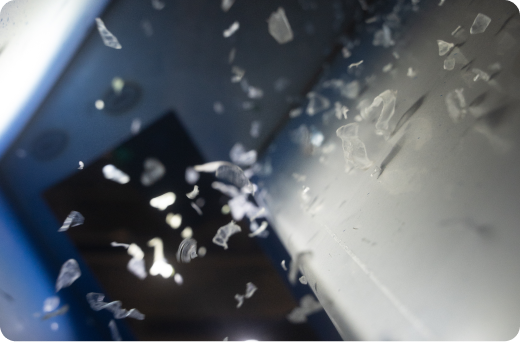
Clear PET bottles are fed into a cutting mill for wet-shredding. This step combines mechanical cutting with washing, effectively removing dirt and residual liquids from the bottles while grinding them into flakes.
Intensive Washing
The flakes undergo a dual hot washing stage. Hot water is used, along with industrial detergent, defoamer, and caustic soda (to ensure a thorough cleaning process aimed at achieving food-grade readiness standards).
Rinsing and Drying
A post-wash stage uses clean fresh water to rinse away any remaining caustic detergent. Finally, the flakes are rinsed and air-dried.
Final Quality and Packaging
The final stage ensures the recycled flakes meet strict purity specifications
Flake Sifting
The dried PET flakes are passed through a vibrating screen/tank to ensure they are of the correct size.
Final Optical Purity Check
A final optical sorter station inspects the flakes to confirm their purity, ensuring only the desired PET material remains, free from contaminants like label flakes or cap/ring fragments.
Material Collection
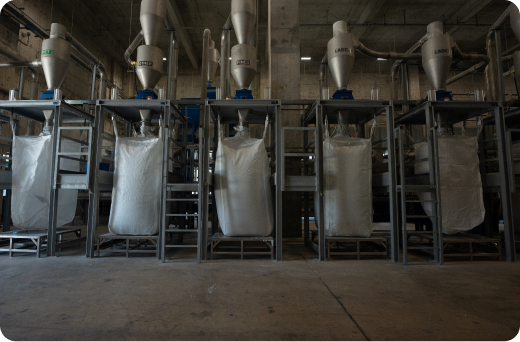
The separated PET flakes, label flakes (separated by air), and cap & ring flakes (separated by water) generated during production are collected and transported via an air-blowing pipeline into dedicated big bags.
Laboratory Verification
Every batch is rigorously monitored and inspected by the in-house quality control laboratory to guarantee that the the highest applicable industry standards are consistently met.